


 Written by
Google has started rolling out the November 2026 core update. If your rankings or traffic shifted in the last couple of days, this could probably be the reason. Here is what we know and the best way to proceed for the next couple of weeks.
What Google Has Confirmed
The November 2026 core update started on November 10, 2026, at 10:06 a.m. PT, according to the Google Search Status Dashboard. This core update affects all languages and can take up to two weeks to complete, meaning the updates could continue through November 24.
Google Search Central also announced it on LinkedIn, calling it “a regular update” designed to better surface relevant, satisfying content for searchers from all types of sites, and noting that the rollout may take up to two weeks.
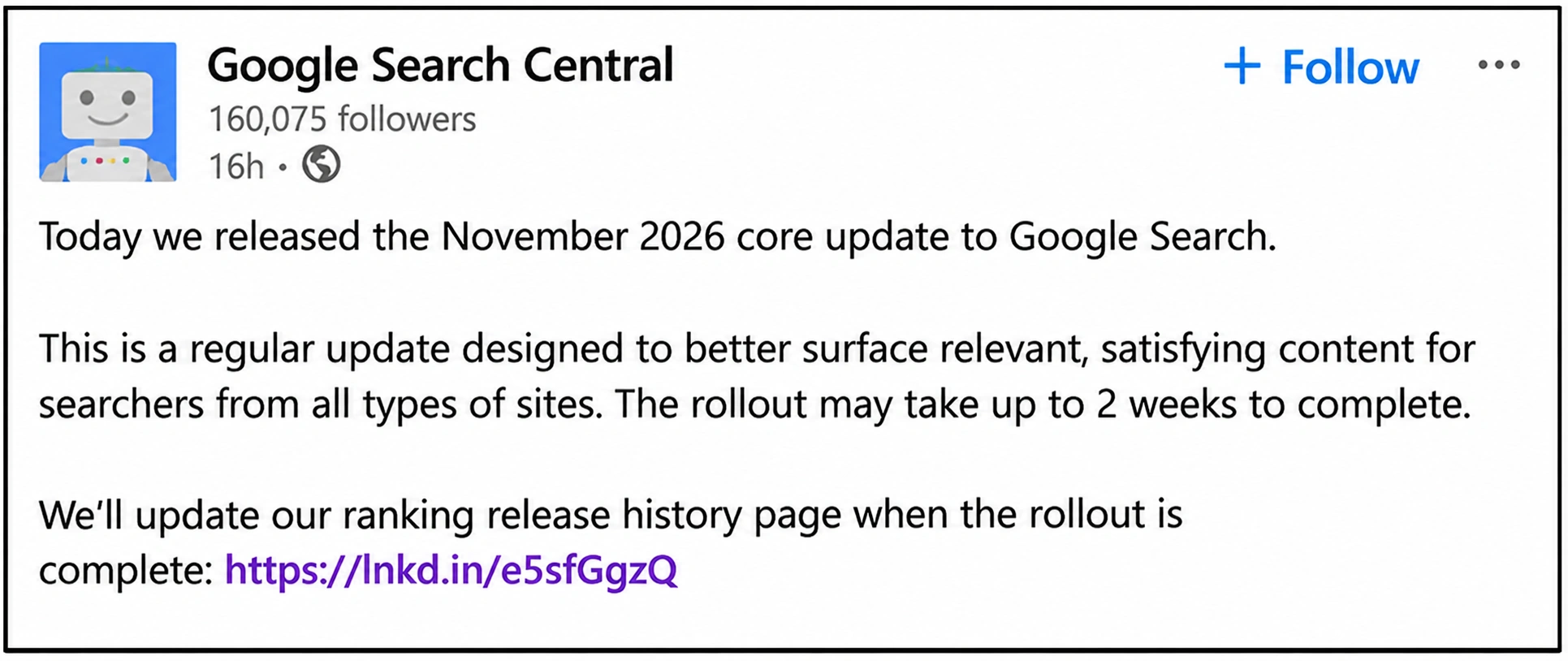
Google hasn’t said what (if any) focus this core update has. Generally, core updates are meant to improve the relevancy and quality of the search results. This is the third core update of 2026, following the March and May updates.
What Should You Do Right Now?
Generally, knee-jerk changes are not suggested. During a core update, site rankings are not stable and can fluctuate. Google suggests waiting for the core update to be completed and then waiting an additional week before doing any analysis. If you need to do analysis, take data from Search Console for the week after the core update and compare it to the week before the update (the week of November 10).
Timing matters this year. This is right around Thanksgiving in the U.S., so sites in the retail and eCommerce industries should be prepared for increased site traffic and activity. While core updates can negatively impact individual pages, core updates are beneficial to Google and keep its systems current with changes on the web.
What You May Expect From Google’s November 2026 Core Update
Google hasn’t shared specifics, but based on its past guidance, these are the areas most likely to matter:
-
Bulk AI content with no user value: Pages mass-produced with AI that repeat what already ranks and add nothing new are most at risk.
-
Thin or unoriginal pages: Rewritten, scraped, or templated content may lose visibility to pages with original insight.
-
Weak experience and trust signals: Missing author details, unclear sourcing, and cluttered pages can hurt, especially on health, finance, and other sensitive topics.
-
Content that doesn’t satisfy intent: Pages that make visitors go back to the results to find a real answer may slip.
-
Original, expert-led content: Pages with first-hand experience, clear answers, and real expertise are likely to hold or gain.
Previous Google Core and Spam Updates
Here is a quick look at recent Google updates:
-
December 2025 core update: Google’s last core update of 2025.
-
February 2026 Discover update: Started February 5. Took 21 days, 17 hours.
-
March 2026 spam update: Started March 24. Took 19 hours, 30 minutes.
-
March 2026 core update: Started March 27. Took 12 days, 4 hours.
-
May 2026 core update: Started May 21. Took 11 days, 21 hours.
-
June 2026 spam update: Started June 24. Took 2 days, 1 hour.
-
August 2026 spam update: Started August 18. Took 2 days, 16 hours.
-
September 2026 spam update: Started September 24. Took 13 days, 16 hours.
-
November 2026 core update: Started November 10 and is still rolling out.
This is the eighth ranking update on Google’s dashboard this year, so frequent changes are now normal for search.
Final Words
The November 2026 core update has begun, and it may take up to two weeks. For now, monitor, don’t panic, and avoid major site changes mid-rollout. Once Google confirms completion, compare your data against the pre-update baseline and look at which pages gained or lost. Keep focusing on helpful, original, people-first content, because that is what core updates are designed to reward.
If your rankings were affected, or you want a site that holds up through future updates, our organic SEO services can help you build lasting visibility. We’ll update this post when the rollout ends. For anything else, the team at DIGITECH India is happy to assist.


